PMNA Helps Return Factory Porsche 962 to Track

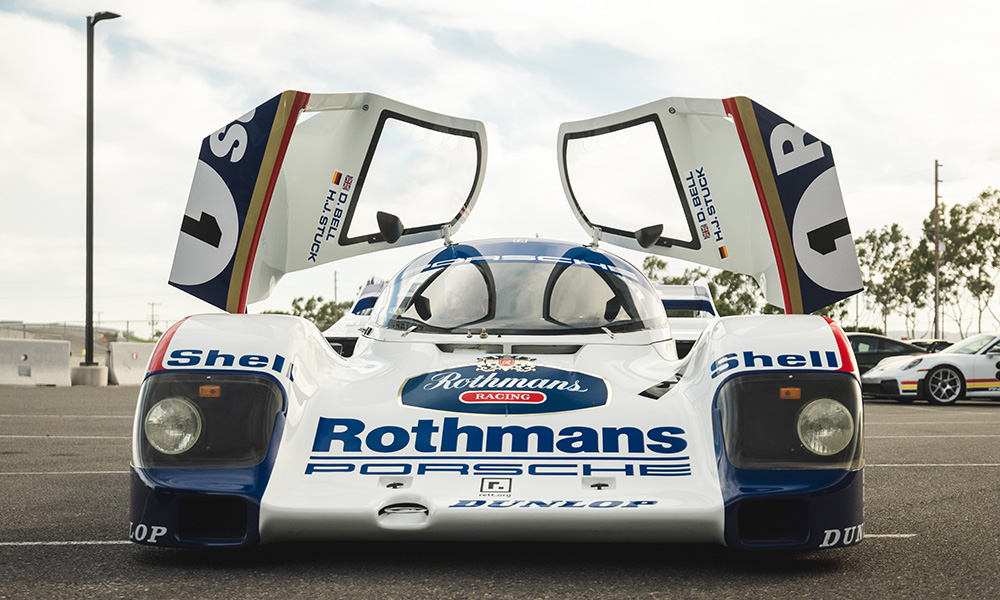
Photo: PMNA
With help from Porsche Motorsport North America, a rare factory Porsche 962 race car has returned to doing what it was built for nearly four decades ago: running at speed on track.
Seeing a historically significant car in a museum is special, but nothing compares to watching a piece of the past perform the duties it was built for – going fast on a race track.
That sentiment is what led longtime racer and collector Charles Nearburg to embark on a restoration project last November with Porsche Motorsport North America. The mission? Bringing one of the most prized pieces of his “Howlin’ Collection” back to sporting form: Porsche 962 chassis 962C-005.
A rare piece of Porsche history.
Nearburg’s racing journey began in SCCA club competition in the Southwest, finishing second in the National Championship race, and moved to a professional racing effort in open wheel racing in the late 80s and early 90s, including driving Walter Payton’s Reynard Cosworth in the 1997 CART season.
In 2010 he set an FIA world record at 414 mph in a Nearburg Racing shop-built single-engine normally aspirated streamliner on the Bonneville Salt Flats in a car named “Spirit of Rett.”
While his racing career didn’t directly overlap with the storied Group C era, Nearburg is no stranger to sports car racing in the U.S., and on the global stage. His venerable resume includes success in IMSA at the 12 Hours of Sebring and on the global stage at the 24 Hours of Le Mans. Thus, this car is one among his collection that he holds especially dear.
“While everyone has dreams, I don’t imagine the young man driving a Lotus Super 7 or Chevy Camaro in SCCA club races throughout Texas had a vision of a shiny factory Porsche 962 in his possession,” Nearburg said.
While the Nearburg Collection contains multiple historic Porsches, a host of vintage Formula 1 cars, and more, the 962 is one of just nine Porsche factory cars ever produced. Just seven are in private hands.
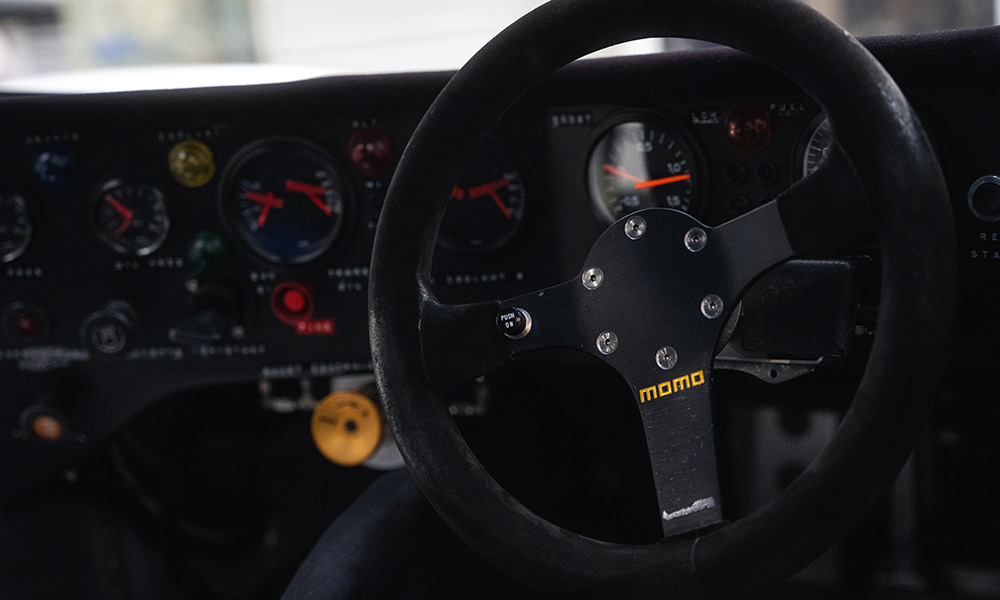
Photo: PMNA
The 962 remains one of the most successful sports prototypes ever built, dominating both Group C and IMSA GTP competition throughout the 1980s.
Its value on the track also directly translated to the old adage, race on Sunday and sell on Monday. As the first race car with a PDK transmission, the 962 remains an important technological pioneer for Porsche to this day.
It featured an early version of Porsche’s groundbreaking PDK transmission, racing with a prototype version of the semi-automatic gearbox at Nürburgring and Hockenheim in 1986. Much of the original wiring from that system remains with the car today.
When Nearburg acquired the car, however, it needed substantial work.
“The car was basically a close-to-runnable show car when we took delivery,” he said. “It had been sitting for quite some time and needed significant service to return it to a track-ready condition.”
Restoring a factory prototype presents challenges far beyond those associated with a typical race car. Parts availability can be limited, but accurate information is often even harder to find.
Nearburg, though, had a valuable resource at his disposal – Porsche Motorsport North America. For most motorsport fans, PMNA is synonymous with customer racing success. From IMSA championships to one-make competition, PMNA serves as the backbone of Porsche’s modern racing efforts across North America.
Yet beyond the current generation of race cars lies another side of the organization, one dedicated to preserving, supporting, and exercising some of the most historically significant Porsche competition machines ever built.
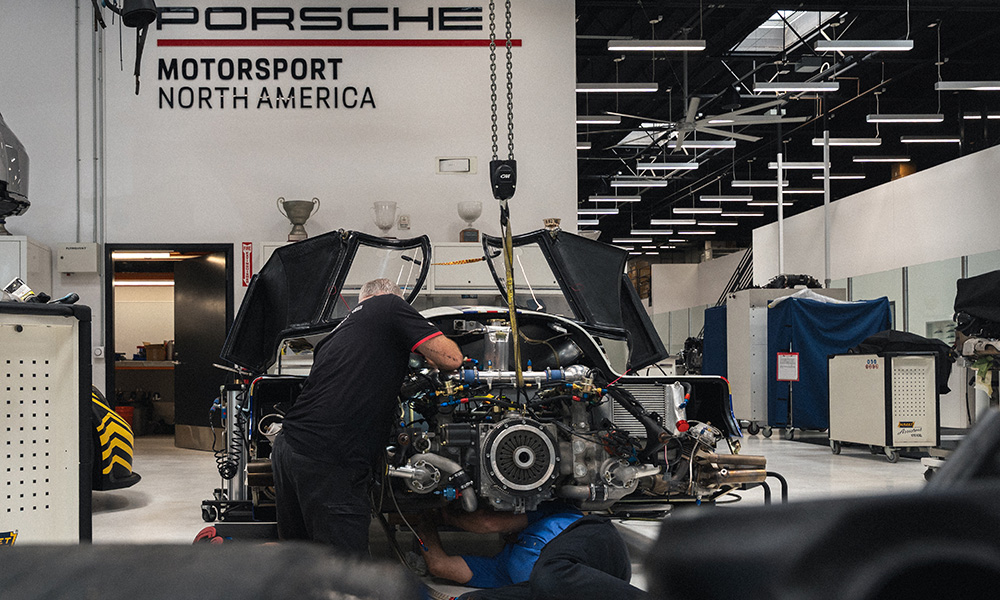
Photo: PMNA
That is where PMNA’s historic support resources became invaluable.
“Obviously, sourcing parts and accurate information on a factory prototype race car can be a challenge,” Nearburg said. “This is where (ANDIAL co-founder and former PMNA leader) Alwin Springer and the PMNA staff have always been a valuable and willing resource.”
Nearburg’s relationship with PMNA stretches back nearly two decades through previous professional racing programs. That connection led to an earlier engine project involving a Porsche 917 from his collection and ultimately made PMNA the natural choice for the 962.
“Of the options available both in the U.S. and Europe, we felt this was the facility that had both the historical reference and recent experience needed to complete the project successfully,” Nearburg said.
One of PMNA’s greatest strengths is access to factory records, technical drawings, and historical documentation that help eliminate guesswork.
“The largest challenges are rumors and parts supplies,” Nearburg said. “It requires constant filtering to stay on course. With PMNA, we can just pull up a factory drawing or manual and see how it really was back in the day.”
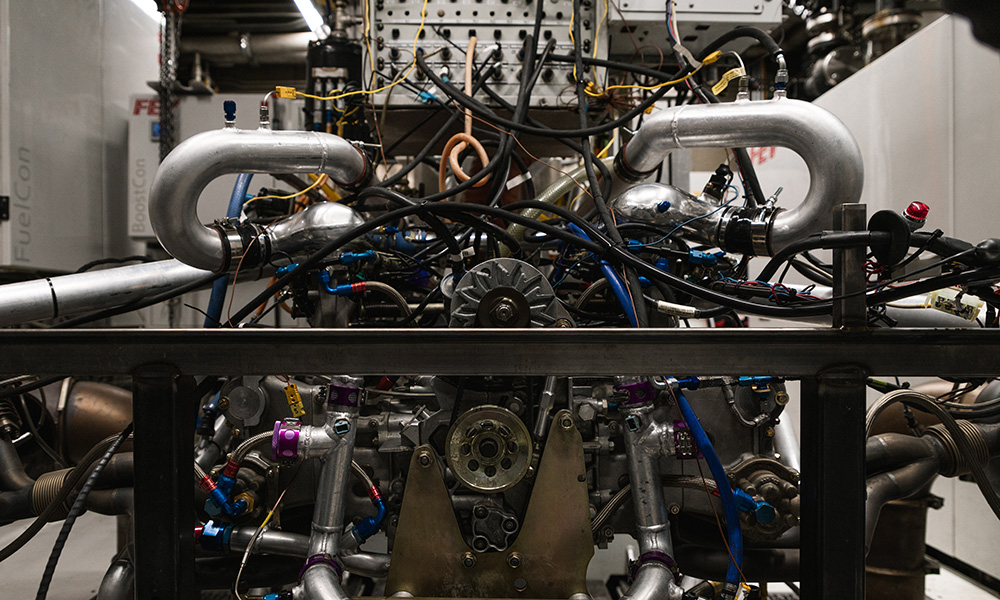
Photo: PMNA
The project also highlighted another capability not often associated with historic race cars: PMNA’s on-site engine dynamometer. Following engine disassembly, inspection and repairs, engineers were able to evaluate engine performance and perform mapping and calibration before the car moved directly outside to the Porsche Experience Center Los Angeles track for testing.
For Nearburg, the ability to combine those resources in a single location proved especially valuable.
“The ability to perform a basic shakedown check on site is reassuring and extremely convenient,” he said. “While it is not a full-on race circuit, you can confirm basic functions and performance without the need to rent a true race facility and travel hours away. Simple issues can be addressed immediately, and you still have full access to the PMNA staff and facility.”
The process allowed the team to move seamlessly from dyno testing to on-track validation, ensuring the car was performing as intended before it returned to the Nearburg Racing shop in April – just six months after it originally made it to Carson, California and the PMNA headquarters.
A month later, Nearburg was behind the wheel for a trouble-free session at Circuit of The Americas.
Driving a 962, however, remains a very different experience from operating a modern race car. Drivers must anticipate turbocharger response, manage a traditional clutch and shift lever, and stay ahead of the car’s reactions rather than relying on modern electronic systems.
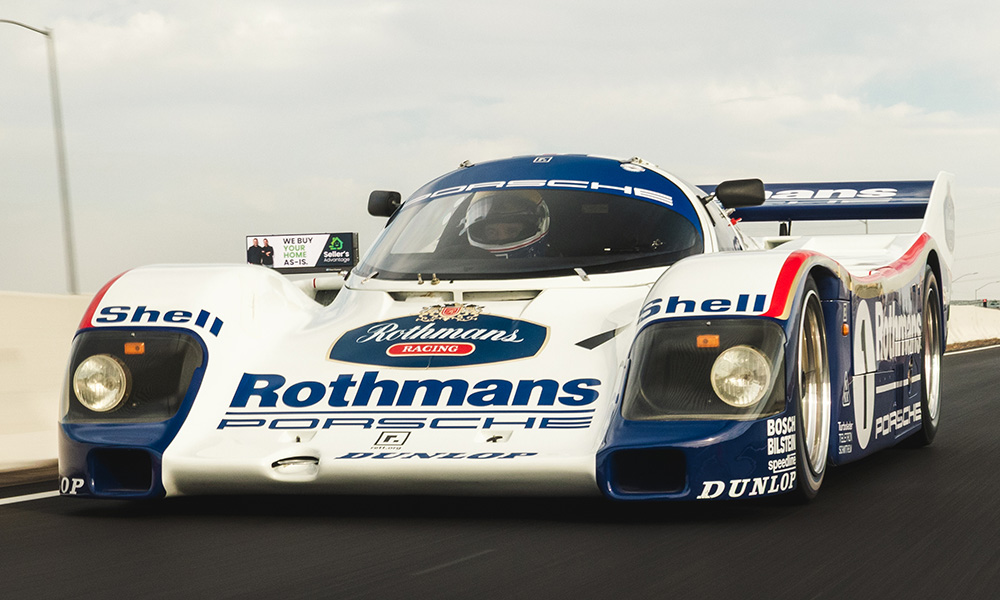
Photo: PMNA
“If you are late to the throttle, you simply have to wait,” Nearburg explained. “In a more modern car, the electronic boost control is much more linear.”
That analog nature is part of what makes the car so compelling today. Fans are often surprised to discover the Rothmans-liveried machine is a genuine factory Porsche rather than a tribute.
“There were many customer cars produced, but very few run by Porsche in the classic Rothmans livery,” Nearburg said. “We are often asked if it is really a Rothmans car or if it is just painted that way.”
Maintaining that authenticity remains a priority. While safety systems are updated to modern standards, the car still utilizes its original Bosch ECU and ignition system.
For Nearburg, preserving these cars does not mean keeping them hidden away.
“Having cars that are capable of being run to their full in-period potential is a priority for the Howlin’ Collection,” he said.
That philosophy aligns closely with PMNA’s historic support mission. Beyond supporting today’s customer race cars, the organization provides the expertise, facilities, and factory knowledge needed to keep Porsche’s racing heritage alive and functioning.
Ultimately, Nearburg hopes fans take away an appreciation for one of endurance racing’s greatest eras whenever they see the 962 on track.
The project serves as a reminder that PMNA’s capabilities extend well beyond contemporary customer racing.
Source: Sports Car 365