Ford Hits “Significant Milestone” in Engine Fire-Up in LMDh Spine

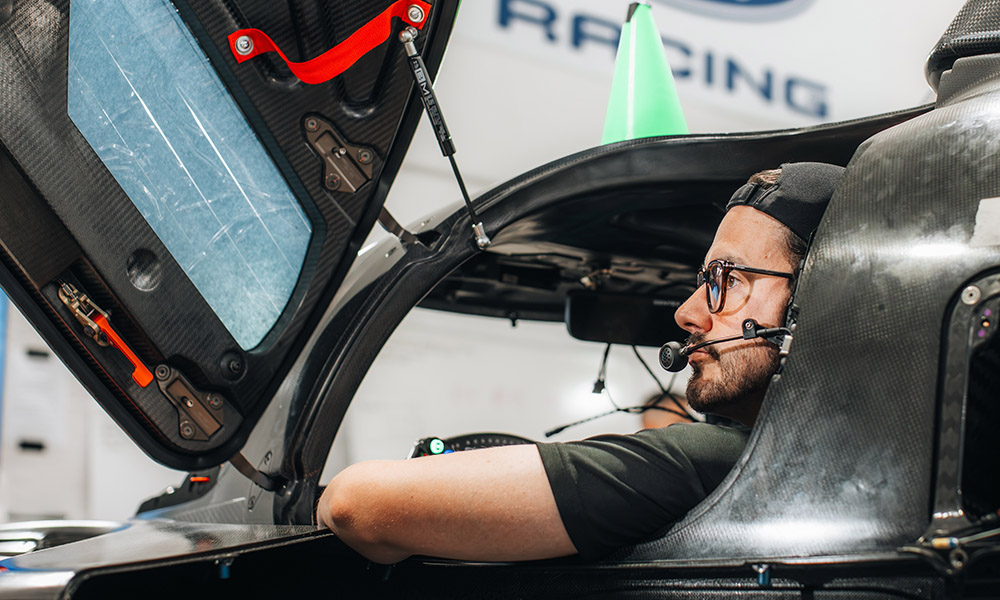
Photo: Ford
Ford Racing’s FIA World Endurance Championship Hypercar program reached a “significant milestone” last week when its 5.4-liter naturally-aspirated Coyote V8 engine was fired up for the first time installed within the ORECA LMDh chassis.
It marked the first time the V8 engine, designed, developed and built in-house, came to life outside of the dyno cells of Dearborn, Mich. headquarters.
The historic moment came at ORECA’s base in the south of France, where the final assembly of the yet-to-be-named LMDh car is occurring prior to its planned rollout early next month.
“This moment was the culmination of months of painstaking work,” said Ford Racing WEC Hypercar program manager Dan Sayers.
“I am proud of the groundwork that was laid long before the engine ever turned over in France.
“The engine’s development phase is already showing great promise on the dynos in Dearborn, where we’ve been pushing the limits of its performance, durability and learning a lot at the same time.
“That dyno work, combined with parallel progress on the chassis side with ORECA, has now converged into a complete package ready for its next phase.
“The firing of the engine at ORECA is more than a symbolic moment – it’s a critical validation step.
“We are doing everything from an engine perspective in-house and we’re doing that because we can react faster, we can learn faster and we can bring that back to the production side of the business.
“Hearing the Coyote V8 come alive within its intended home for the first time confirmed that months of integration work between the powertrain and chassis teams had paid off.”
Ford Racing global director Mark Rushbrook previously confirmed the rollout of the car will occur on Aug. 5 in Le Castellet, ahead of an intensive on-track testing program in Europe, before several end-of-year runs in the U.S.
Sayers said all six of its drivers, including the recently signed Matt Campbell, Tom Blomqvist and Nick Yelloly, will be part of the testing program.
“Of course it’s early days, and we have a huge amount of work ahead of us, but the sim work and dyno numbers give us a great foundation, but there’s no substitute for what the drivers feel through the wheel and the seat once we’re actually out on track,” said Sayers.
“That feedback loop is what will truly sharpen this car over the upcoming months.”
Source: Sports Car 365