GTA Confirms Move to ENEOS-Produced E10 Fuel for GT500
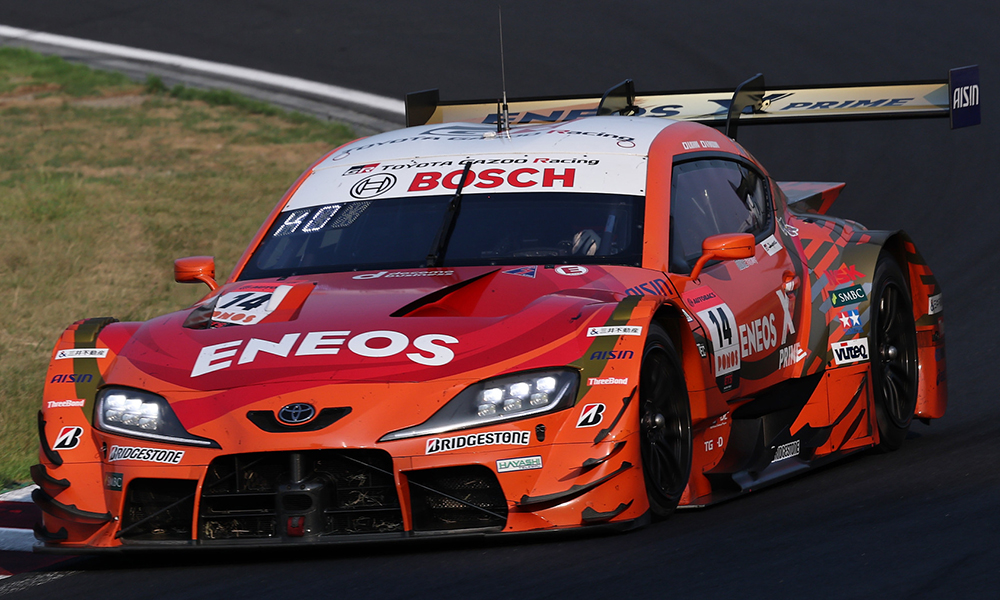
Photo: SUPER GT
SUPER GT organizer GTA has revealed that the GT500 class will use domestically-produced E10 fuel this season as part of a new agreement with ENEOS, confirming a move away from the previous carbon-neutral fuel supplied by Haltermann Carless.
As previously reported by Sportscar365, the series has opted for a move away from Haltermann’s ETS Racing Fuels brand, which had supplied the GT500 class since 2023 and GT300 since 2024, in favor of a tie-up with Japanese oil giant ENEOS.
That’s despite the agreement with German firm Haltermann having originally been due to expire following the conclusion of the 2026 season.
Explaining the move during the opening day of official pre-season testing at Okayama International Circuit on Friday, GTA chairman Masaaki Bandoh underlined the organizer’s long-held desire to switch to a domestic fuel rather than importing it from aboard.
The new fuel, which is already in use for this week’s first official pre-season test at Okayama International Circuit, is however not the same product as the one ENEOS has developed with raBit for Super Formula, as the GTA had initially targeted.
“We are working together with ENEOS to create a ‘Made in Japan’ fuel, and we are starting off with E10,” Bandoh explained. “Each of the three manufacturers has been performing bench testing and real-life testing with the new fuel.
“Initially, we thought that we could share the fuel that was being created in the Fukushima plant for Super Formula, but it turns out they can’t create that much, so we are having ours made somewhere else, but we are working together with ENEOS.
“With the previous supplier, even though they were able to create 100 percent synthesized fuel, as it was being brought over to Japan by boat, we always had certain doubts, and we were really aiming to have a domestic product from the start.
“The conversations began with ENEOS when they were making the fuel for Super Formula, and we thought if we go with E10, we can achieve the goal of using a domestic product, so we decided that’s what we should do.
“There may be some negatives, but we wanted to make another step forward taking what we learned by working with Haltermann Carless. We are glad we worked together with them, but we always wanted to use domestically-made fuel.”
A GTA spokesperson confirmed that GT300 teams will go back to using regular high-octane gasoline supplied by each circuit, as was the case in past years, but the organizers’ desire is for the lower class to also switch to E10 in the future.
SUPER GT’s change of fuel supplier comes at the same time as it imposes new rules allowing only a single engine per year in the GT500 class, a move that the previously-announced reduction in fuel flow is designed to help facilitate.
GTA Hopes to Announce One-Make Tire Suppliers at Fuji Test
Late last year, the GTA confirmed that SUPER GT will switch to a single tire supplier in each class in 2027, bringing down the curtain on the series’ long-running tire war.
However, it has yet to announce which of the four current suppliers — Bridgestone, Yokohama, Dunlop and Michelin — have been awarded the tenders.
Bandoh said that the GTA hopes to make an announcement on this front during next week’s second official test at Fuji Speedway.
He also revealed that a first test involving the single-make tires is planned to be held at the same track on the Monday after the fourth round of the season in August, involving teams from both classes, with further tests planned after subsequent races.
Revealing further details regarding how the series will look with one-make tires, Bandoh clarified that the vision is for the new supplier to supply teams with Hard, Medium and Soft tires instead of the current ‘menu’ of compounds and constructions.
“We will introduce tires that are color-coded, similar to Formula 1, and probably we will use two of the three compounds for each race,” he said. “For example, for a sprint race [300km] we may just use Soft and Medium tires.
“We have been steadily reducing the number of tire sets used, so we need to focus on developing tires that can run properly for a three-hour race.
“First of all, we need tires that can run the same distance as this year’s, and with that in mind we will stick to similar race distances for next year, and then we will consider tires that can run for longer, which is also a cost-reducing measure.”
Source: Sports Car 365